
“I get plenty of sleep but I’m always tired, what’s going on?”
If you’ve ever had this thought, you might want to get your iron levels checked!

Iron is a mineral that is used to make hemoglobin, a protein in red blood cells that carries oxygen throughout your body. Iron plays a role in various body functions, including growth & brain development in kids, muscle function, the immune system, hormone creation and energy production.
If you’ve ever looked at your bloodwork results, you may have seen tests for hemoglobin and ferritin, which are two common tests to check current blood levels as well as iron storage. There are other tests you may have had done as well, but we won’t cover those in this post.
Some individuals need more iron than others, including:
vegetarians,
pregnant people,
athletes,
those who donate blood often,
have celiac or other GI conditions that affect nutrient absorption,
those who have heavy menstrual periods or regular blood loss,
and in some cases, those who take hormone replacement therapy.
Our age and sex influence how much iron we need at different times in our lives:
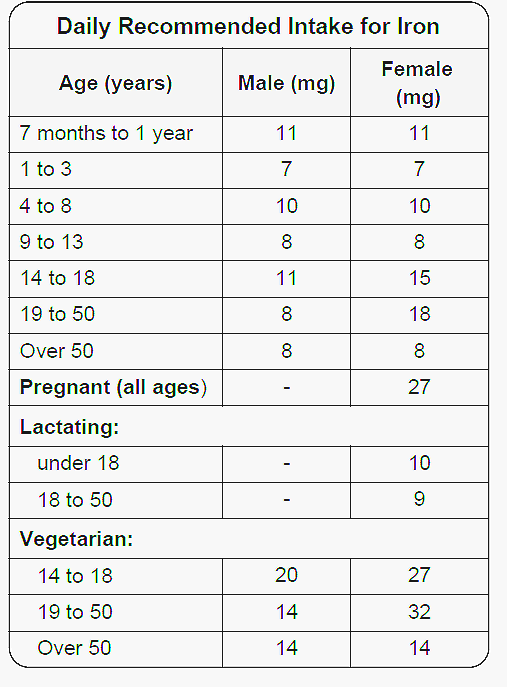
Image from Alberta Health Services; Iron and your Health pdf
Not all food sources are created equal. Heme iron, which is found in animal products, is more readily absorbed by the body. It is also less influenced by other nutrient components that can reduce absorption. Non-heme iron is found in plant-foods and is less bioavailable; consuming vitamin C with these sources can help increase absorption rates. Aim to limit tea, coffee and calcium supplements at the time you eat these foods.
So, what foods contain more iron than others? Let’s check it out!
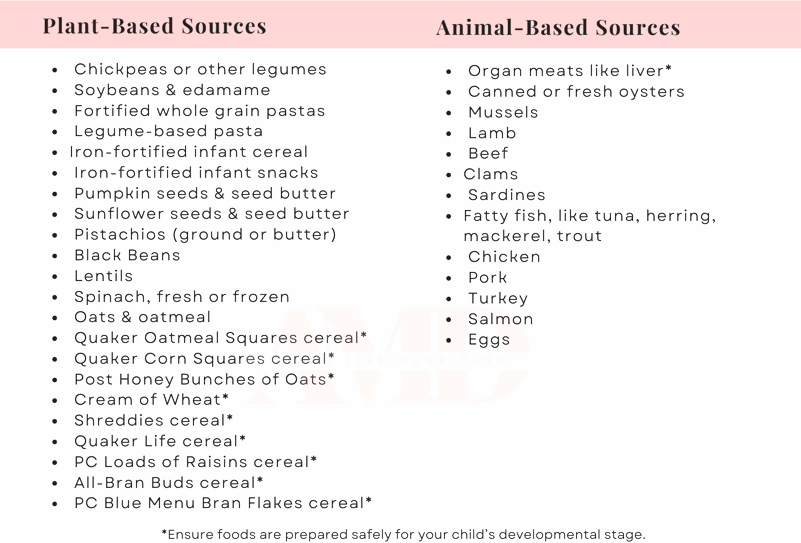
AMD Nutrition Iron-Rich Foods pdf
This is not an exhaustive list and total intake will depend on the portion you are consuming. Check your nutrient facts panel on each product for the serving size and iron content that corresponds with the amount that you’ll actually eat.
If you have food limitations or are deficient already, you may need a supplement to restore and/or maintain levels. Speak with your healthcare provider for bloodwork prior to taking a supplement, as other nutrient deficiencies may mask or be similar to iron-deficiency, or you may require IV iron initially. And always ensure your pharmacist is aware of all supplements you take!
Want more information or a printable copy of either resource mentioned above? Reach out using the form below or follow us on social media!
*Remember, this blog is for information/educational purposes only, it’s not a substitute for professional medical advice and doesn’t replace that which is provided by your healthcare providers. Speak to your HCP before making any changes to your health or nutrition plan.